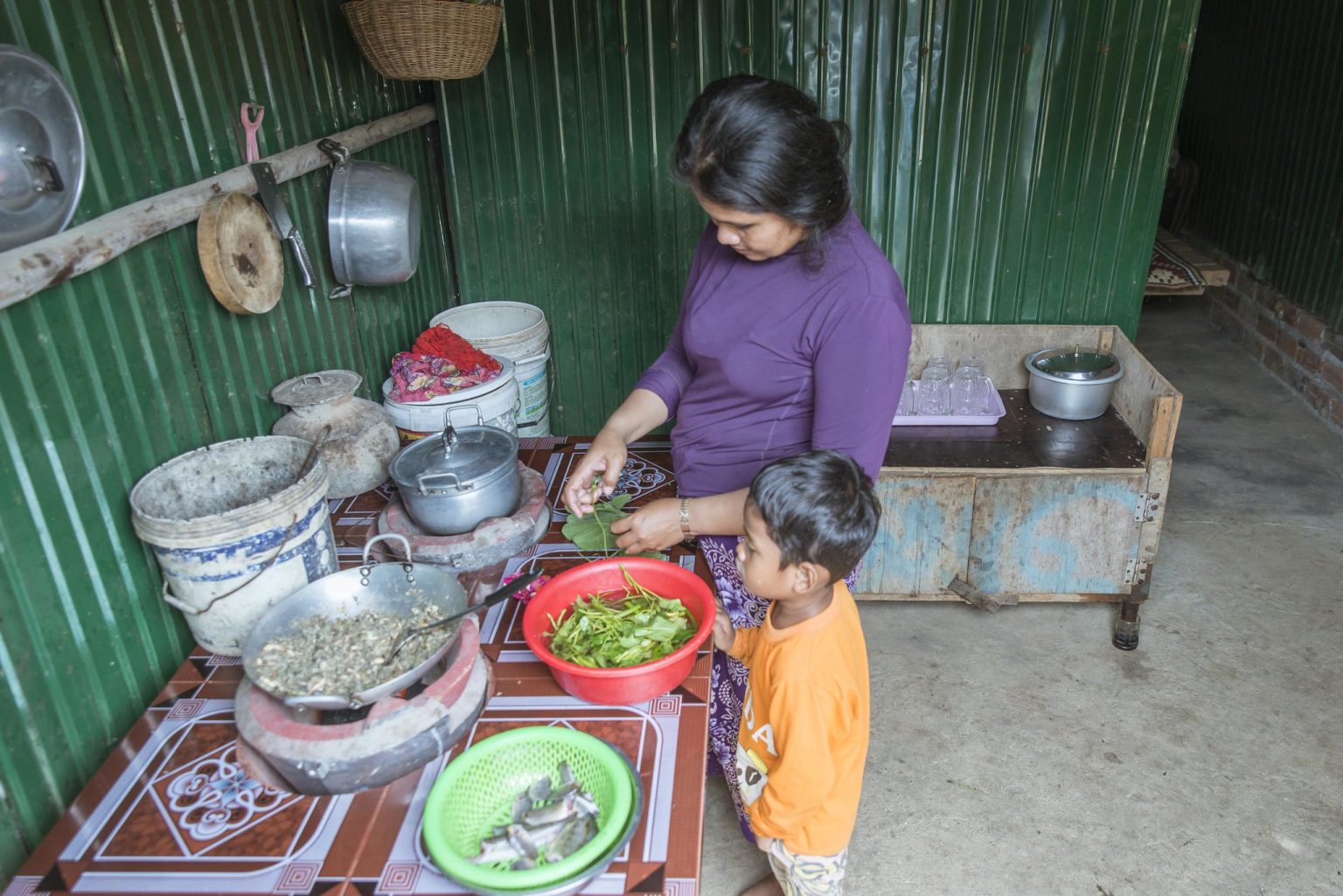
SAVANNAH, Georgia — The Lower Mekong River Basin, which consists of Thailand, Lao PDR, Cambodia and Vietnam, has limited access to clean cooking. In low-income communities, firewood remains the dominant heat source. Because of the region’s culture, most cooks are women. This clash between poverty and culture disproportionately affects women, leading to long-term health risks for the mother and the child.
The Harm of Biomass Fuels
A study from the Radiological Society of North America’s (RSNA) annual meeting shows that 3 billion people rely on biomass fuel, including wood, thatches, and dried bush, as a heat source. This is approximately 35% of the world’s population, and it accounts for 4 million deaths from household air pollution yearly.
According to Isabelle Romieu and Astrid Schillmann, biomass smoke contains respiratory irritants such as phenols and acetaldehyde and carcinogenic compounds such as benzene and formaldehyde.
A 2013 USAID report indicates that 96% of Cambodian households in rural areas use wood as the main fuel source. More than 2 million are exposed to indoor air pollution. 47% of the households’ cooks are women, and 46% of their assistants are female children.
An explanation for the prominent use of biomass is cost. Wood costs less than 23$, free in some households, per year. Additionally, 81% of the households have women responsible for collecting fuel, according to the same report.
Smoke-Free Village
SNV, a global developmental organization, operated the Smoke-Free-Village approach to decrease biomass usage and lessen the severity of the fuel’s health risks. To investigate the situation, The Borgen Project spoke with Bastiaan Teune, The Energy Sector Leader of Cambodia from SNV.
“The Sustainable Development Goals is our framework. We follow an approach to make energy about people and give decent energy services to everybody, not only cities or the health of the well-offs,” Teune explained. The Smoke-Free-Village involves policy interventions, supply chain development, demand creation and behavioral change.
Improving the communities’ understanding of cooking and health is at the center of the project. SNV hosts school gatherings, door visits, village meetings and cooking demonstrations. “We work with 500 villages, and these villages are clustered in communes. This is behavioral. You have to do it together. If my neighbor is still using firewood and I have clean cooking, it does not matter because the smoke will disintegrate throughout the village,” said Teune. The project covers 500,000 people living in 100,000 households in Kampot, Kampong Speu, Battambang and Siem Reap provinces.
SNV also reaches out to community leaders such as Community Councils, monks, teachers and health workers to educate and set policies when appropriate. The four key behavioral notes are keeping children away from smoke, drying wood before cooking, cooking in a well-ventilated room and investing in clean cookstoves. The goal is to trigger a demand for clean cookstoves and fuels, which motivates businesses to seek opportunities. Once a supply-demand chain is established, the Smoke-Free-Village project will strengthen institutions and secure a systemic change.
“In rural Cambodia, it comes down to costs. Some people say, ‘It costs less when I collect firewood.’ I always say it costs you even more if you don’t break free from the bushes.” said Teune. Wood costs from 0-$0.20 per kg compared to $0.15 kWh of electricity. However, the monthly fuel consumption is 85 kg on average, which results in a monthly cost of $17, compared to 6$ and 43 kWh, according to the SNV report.
The Outcome of a Smoke-Free Village
“The health concerns voiced by villagers go up from 40 to 66%. Traditional wood stove usage as a primary stove is going down from 60 to 39%. It takes just six months to change,” said Teune.
As more households acquire more electric and liquefied petroleum gas (LPG) cookstoves, the amount of traditional wood stoves decreases. LPG cookstoves are the most popular, reaching 34,975 in 2024. As a result, 15,163 wood stoves are removed, according to the SNV report.
SFV was a success because of its adaptation from its colleague project, WASH, and a competent team of female committees. Besides the internal factors are Cambodia’s increasing urbanization and health-inclined culture. “People live with an expandable income, and there’s a culture. Cambodians are more responsive to modern lifestyle,” Teune said.
Looking Ahead
“It is really about education that makes this program very exciting,” Bastiaan Teune said. With a pertinent effort and sincere altruism, Smoke-Free Village has seen successful changes in Cambodia’s usage of clean energy in cooking and, most importantly, better health for the women involved in the cooking process. SFV changes the norms regarding cooking in Cambodia’s rural areas. Thanks to SNV’s global presence, the project is looking to expand to neighboring countries such as Laos PDR and African countries. In the future, SNV will build off the Smoke-Free Village model in Cambodia and collaborate with major health partners.
Photo: Flickr
Originally published at The Borgen Project